
Start Your Own Water Brand
Pan-India private label mineral water. Low MOQ, fast turnaround, 4 packaging formats.
How to Choose the Right Private Label Water Supplier: An 8-Point Vendor Checklist
Most private label water disasters do not happen at contract signing — they happen six months in, when a label peels off in a chiller, a batch fails a retail audit, a wedding-season order slips, or a client’s procurement team asks for certification documents the supplier cannot produce. By then, your brand name is already on every bottle. This checklist moves those discoveries to before the first purchase order. It is written for hotel F&B and procurement managers, corporate admin and facilities heads, restaurant and café groups, gym chains, event companies, and D2C founders — plus export buyers sourcing from India for the UAE, UK, Singapore, and Vietnam.
Direct answer: to choose the right private label water supplier, verify eight things in this order: (1) certifications that protect your brand — ISO 22000, ISO 9001, US FDA registration, and HACCP, not just the statutory minimum; (2) source and mineral transparency — the water’s origin, pH, and TDS in writing; (3) packaging format range — aluminum can, PET, glass, and PLA from 200ml to 20L under one manufacturer; (4) MOQ flexibility and room to scale; (5) delivery footprint across the cities you operate in; (6) lead times and surge capacity for peak seasons; (7) pricing transparency — what is included and what triggers surcharges; and (8) a verifiable client track record. A supplier that fails on certification or source transparency should be eliminated regardless of price — those two failures damage your brand, not your budget.
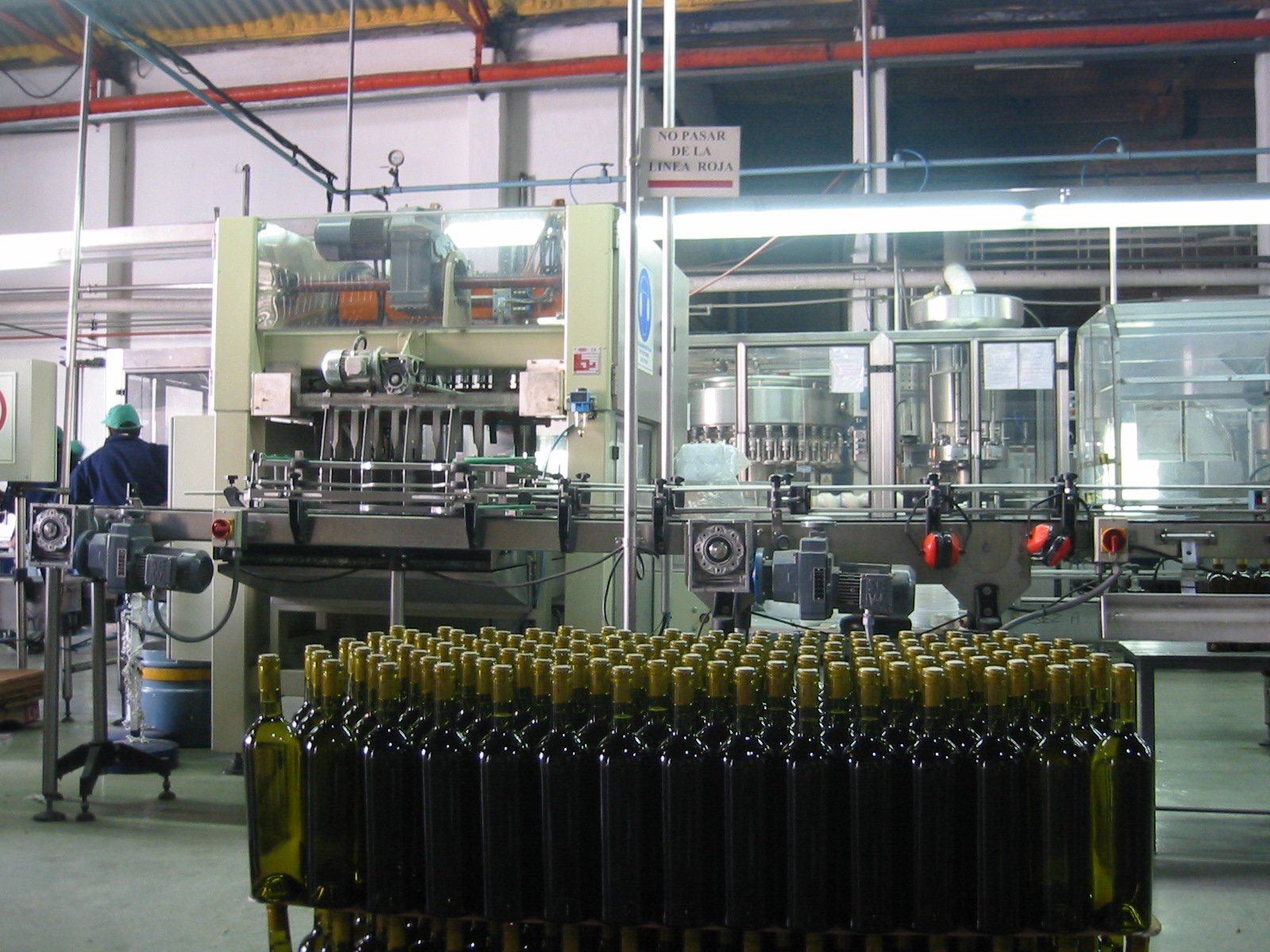
Why This Decision Is a Brand-Risk Decision, Not a Procurement Decision
Private label water is unusual among procured goods: the end customer never sees the manufacturer — a hotel guest, gym member, or retail shopper sees only your brand on the bottle. Every quality failure, delayed delivery, and non-compliant label attaches to your name, not the supplier’s. The economics amplify this: water is low-margin and high-volume, so a decision made to save ₹2 per bottle can be undone by one incident that costs a corporate account or a hotel’s guest-review score.
There is also a regulatory asymmetry. In India, the statutory baseline has changed: FSSAI has gazette-notified the omission of the provision that made BIS certification mandatory for packaged drinking water and mineral water, replacing it with a compulsory Scheme of Testing for licensed water businesses from 1 January 2026. The floor has moved — but a floor is all the statutory minimum is. Buyers whose own customers are hotels, corporates, and international retailers need to evaluate suppliers against a higher bar, and the eight points below are that bar.

The 8-Point Vendor Checklist
1. Certifications that actually protect your brand
Ask for the certificates themselves — current, scope-matched documents, not website claims. The stack that matters: ISO 22000 (the food safety management system governing the whole production chain), ISO 9001 (quality management and process consistency), US FDA registration (the facility is registered to export into the world’s strictest regulated market — essential for export buyers, a strong signal domestically), and HACCP (hazard analysis at each critical control point). A supplier holding all four hands your procurement or audit team a single, coherent compliance file. A supplier holding only the statutory licence is asking your brand to underwrite the difference. We break down what each certificate actually verifies in our guide to ISO 22000, ISO 9001, US FDA & HACCP for water partners.
2. Source and mineral transparency
The single most revealing question in a supplier evaluation is also the simplest: where is the water actually from, and what is its analysis? Two red flags are common in the Indian market. The first is the trader or label-printing operation reselling someone else’s plant output — they often cannot state the source with certainty because it changes. The second is the supplier who will not put pH and TDS numbers in writing. You want a supplier that bottles at source and publishes a real mineral profile — for example, naturally alkaline water at pH 8+ with a TDS of 220–280 ppm, the balanced-mineral range that tastes clean and supports “alkaline” positioning on your label. If your brand story will say “Himalayan” or “alkaline,” the supplier’s lab reports must survive your customer’s scrutiny. Our explainer on pH 8+ alkaline water covers which claims a brand can defend and which it cannot.
3. Packaging format range
Buyers routinely discover too late that their supplier makes exactly one thing well. A hotel needs 500ml PET for rooms, 200–250ml for banquets, and 750ml glass for fine dining. A corporate campus needs 20L jars plus 1L meeting-room bottles. A gym wants 500ml PET and aluminum cans; a café chain wants PLA or glass; a retailer wants a premium shelf-ready can. Map every use case you have today — and the two you will have in eighteen months — against the supplier’s actual catalogue. The strongest position is a manufacturer offering aluminum can, PET, glass, and PLA, from 200ml to 20L: one artwork system, one quality standard, one contract. For when each format wins, see our format comparison guide [Internal link: packaging format comparison — can vs PET vs glass vs PLA].
4. MOQ flexibility and room to scale
Minimum order quantities cut in both directions. Too high, and a D2C founder or a boutique hotel cannot start at all. Too rigid at the top, and a chain growing from one property to twenty has to switch suppliers — re-doing artwork, re-approving labels, and re-filing compliance documentation mid-growth. The right supplier offers a low entry MOQ for a first run and a scale path that does not require changing plants. Ask: what is the MOQ per SKU, what happens to unit pricing at 10x volume, and can a seasonal second SKU run without renegotiating?
5. Delivery footprint across your actual locations
If your brand lives in one city, a local bottler’s distance advantage is real. But most B2B buyers are not single-city: hotel groups have properties across regions, corporates have campuses in multiple metros, retail chains distribute nationally. Every additional city served by a different supplier multiplies contracts, specs, and quality files. A pan-India manufacturer supplying 50+ cities replaces that patchwork with one specification and one compliance pack everywhere you operate — the deciding factor in our Delhi NCR and Mumbai & Bangalore guides. For export buyers the same question becomes international: can the supplier handle export documentation, container logistics, and destination-market compliance? Our export guide for the UAE, UK, Singapore & Vietnam covers that end-to-end.
6. Lead times and surge capacity
Water demand in India is not flat — it spikes. Hotels face the November-to-February wedding season, when a banquet venue can consume tens of thousands of bottles in weeks; event companies buy in bursts; retail brands face festival peaks. The evaluation question is not “what is your lead time?” but “what happens to my lead time in December?” Ask for the lead time on a standard repeat order, on a 3–5x surge order, and — the honest-supplier test — whether surge capacity comes from the supplier’s own multi-plant planning or from a subcontractor you have never audited.
7. Pricing transparency
The cheapest quoted per-bottle price is often the most expensive contract. Compare suppliers on the fully loaded number: artwork and plate charges, label application, mould or die fees for custom shapes, packaging and palletisation, freight (and who owns freight risk), storage between runs, and what triggers surcharges — shorter runs, rush orders, glass handling, or seasonal freight. A transparent supplier quotes these line items unprompted. A supplier who answers every question with a single “rate per bottle” is deferring the surprises to the invoice.
8. Client track record you can verify
“Trusted by leading brands” is marketing; a verifiable track record is evidence. Look for the scale and shape of the client base: 500+ brands served across 50+ cities is a materially different risk profile from a plant running a handful of local labels — it means the supplier has already survived every failure mode on this checklist, repeatedly, for other brands whose reputations were also on the line. Ask for references in your own vertical (if you are a hotel group, talk to another hotel group they supply), and how long their longest-running client relationship has lasted. Longevity through multiple peak seasons is the best predictor of how your own contract will behave.
Scoring the Checklist: Green Flags vs Red Flags
| Checkpoint | Green flag | Red flag |
|---|---|---|
| 1. Certifications | ISO 22000 + ISO 9001 + US FDA + HACCP, current documents with matching scope | Website badges only; expired certs; “BIS/ISI mark” presented as the headline credential post-2026 |
| 2. Source & minerals | Bottled at source; written pH (8+) and TDS (220–280 ppm) with lab reports | Cannot state the source; resells third-party output; refuses written analysis |
| 3. Format range | Can, PET, glass, PLA — 200ml to 20L under one roof | One format only; “we can arrange” formats from an unnamed partner |
| 4. MOQ & scaling | Low entry MOQ; published price steps as volume grows | High rigid MOQ; no path to scale without switching plants |
| 5. Footprint | 50+ cities on one contract; export documentation ready | Single-city delivery; multiple suppliers needed as you expand |
| 6. Surge capacity | Multi-plant planning; seasonal lead times quoted honestly | Surge handled by unaudited subcontractors |
| 7. Pricing | Itemised quote: artwork, freight, surcharges all stated | One flat “rate per bottle” with costs discovered later |
| 8. Track record | 500+ brands, 50+ cities, referenceable clients in your vertical | No references; client list that cannot be named |
A private label supplier is not selling you bottles. They are selling you the continued right to put your name on them — evaluate accordingly.
Red Flags That Should End the Conversation
Most points on this checklist allow negotiation. A few do not. Walk away from any supplier who: cannot produce current certification documents at first meeting; will not disclose the water source or provide a mineral analysis; proposes to solve a format gap by subcontracting to a plant you cannot audit; or quotes a per-bottle price far below market with no explanation. Price anomalies almost always trace back to one of the eight checkpoints: usually source substitution or skipped compliance.
The Checklist, Applied: Domestic Buyers vs Export Buyers
The eight points are the same everywhere, but the weighting shifts by buyer type. Hotel and corporate buyers should weight certifications, delivery footprint, and surge capacity highest — their risk is service failure at a guest-facing moment. Retail and D2C brands should weight format range, MOQ flexibility, and label support highest — their risk is on-shelf presentation and margin structure. Export buyers importing into the UAE, UK, Singapore, or Vietnam should weight certifications (especially US FDA registration and ISO 22000, which anchor destination-market import approvals), export documentation experience, and label-compliance support — full detail in our country-by-country export guide and, for the UAE, our Emirates Quality Mark explainer.
However you weight the points, apply them in order: certifications and source transparency are eliminations, not preferences. Only among suppliers who pass both does price become the deciding variable — and by then, the fully loaded pricing comparison from point 7 will usually surprise you.
Frequently Asked Questions
What is a reasonable MOQ for private label bottled water in India?
It varies by format and supplier scale: entry-level private label runs typically start in the low thousands of units per SKU for standard PET, with higher MOQs for glass and aluminum can runs due to line and tooling constraints. The more important question is the scale path — what the unit price looks like at 10x your first order, and whether growth requires changing plants. A manufacturer with low entry MOQs and a documented scale path is the safer long-term partner.
Which certifications should a private label water supplier have?
At minimum, current statutory licences (FSSAI, with the post-January-2026 compulsory Scheme of Testing in place of the old BIS-mandatory provision). For a brand whose reputation is on the line, look for the full stack: ISO 22000 (food safety management), ISO 9001 (quality management), US FDA registration (facility-level registration enabling exports to the US), and HACCP certification (hazard analysis at critical control points). The combination, verified with current documents, is what de-risks vendor selection.
What does TDS mean on a water spec sheet, and what range is good?
TDS — total dissolved solids — is the measure of dissolved minerals in the water, in ppm. It drives both taste and positioning: very low TDS tastes flat, very high TDS tastes mineral-heavy. The 220–280 ppm range is broadly regarded as the balanced band for premium mineral water — enough mineral character to taste substantial, without the heaviness of high-TDS waters. Insist on the number in writing with a lab report.
Can one supplier serve a hotel group or corporate across multiple Indian cities?
Only if they are genuinely pan-India. Most bottled-water suppliers serve a region; multi-site buyers who sign with them end up running separate contracts, specs, and quality files per city. A manufacturer supplying 50+ cities under one contract gives every location the same water spec, label quality, and certification pack — what multi-site hospitality and corporate procurement teams should insist on.
How do I verify a supplier’s certifications are genuine and current?
Ask for copies of the certificates, check the certificate body and number, confirm the expiry date and the scope (a food-safety certificate scoped to a different facility or product line is not your coverage), and verify via the certification body’s public registry where possible. A supplier proud of its compliance stack produces documents within a day; hesitation is information.
What should an export buyer adding to this checklist check?
Three items: destination-market regulatory compliance (each country’s import and labelling rules — for example the Emirates Quality Mark regime in the UAE), the supplier’s experience with export documentation (health certificates, certificates of origin, destination-aligned test reports), and export-grade packaging that survives long-haul container shipping. US FDA registration and ISO 22000 at the plant are the strongest starting signals.
Run the Checklist on Your Shortlist — or Start With a Supplier Who Passes It
Score your current shortlist against the eight points above; any supplier failing points 1 or 2 is eliminated before price enters the discussion. If you would rather start from a supplier that passes all eight — Himalayan mineral water bottled at source, pH 8+ and TDS 220–280, certified under ISO 22000, ISO 9001, US FDA and HACCP, in aluminum can, PET, glass and PLA from 200ml to 20L, serving 500+ brands across 50+ Indian cities with export documentation for the UAE, UK, Singapore and Vietnam — talk to the Muscular Monk team for a free consultation.
Muscular Monk works with hotels, corporates, restaurants, gyms, event companies and retail brands across India, and with private label export buyers in the UAE, UK, Singapore and Vietnam. Request a consultation and samples here — or start with the fundamentals in our complete private label mineral water guide for India.
Leave a Reply