
Start Your Own Water Brand
Pan-India private label mineral water. Low MOQ, fast turnaround, 4 packaging formats.
ISO 22000, ISO 9001, US FDA & HACCP: Why Certifications Matter When Choosing a Private Label Water Partner
Almost every private label water quote looks similar: a per-bottle price, a minimum order quantity, a list of packaging formats, and a line somewhere about being “ISO certified”. Compare suppliers properly and the questions get harder. Which ISO standard? Audited by whom? Is the certificate in the manufacturer’s name or a trading company’s? Does it cover the plant that will actually bottle your brand — and is it still maintained through annual surveillance audits? Most buyers never ask, and the cost of not asking lands on their own label.
This guide is for brand owners, hotel groups, corporates, retail chains, and exporters choosing a private label water manufacturer, and it covers what each certification verifies, how to verify it yourself in ten minutes, and how the Indian regulatory picture changed in 2026. If you are still at the stage of understanding the model itself, start with our complete guide to private label mineral water manufacturing in India.
Direct answer: ISO 22000 and HACCP certify the food-safety management system of the manufacturing plant; ISO 9001 certifies the quality management system; US FDA registration is not a certification at all but a legal registration and compliance regime that lets a facility supply the US market, backed by 21 CFR Part 129 bottling rules and FSMA duties on the importer. A private label water manufacturer holding all four has documented, auditable processes for source protection, treatment, filling, hygiene, traceability, and corrective action — which is what lets a brand owner put their own name on the bottle without inheriting an unacceptable food-safety risk. Muscular Monk holds ISO 22000, ISO 9001, US FDA registration, and HACCP certification, and each is verifiable with the issuing body.
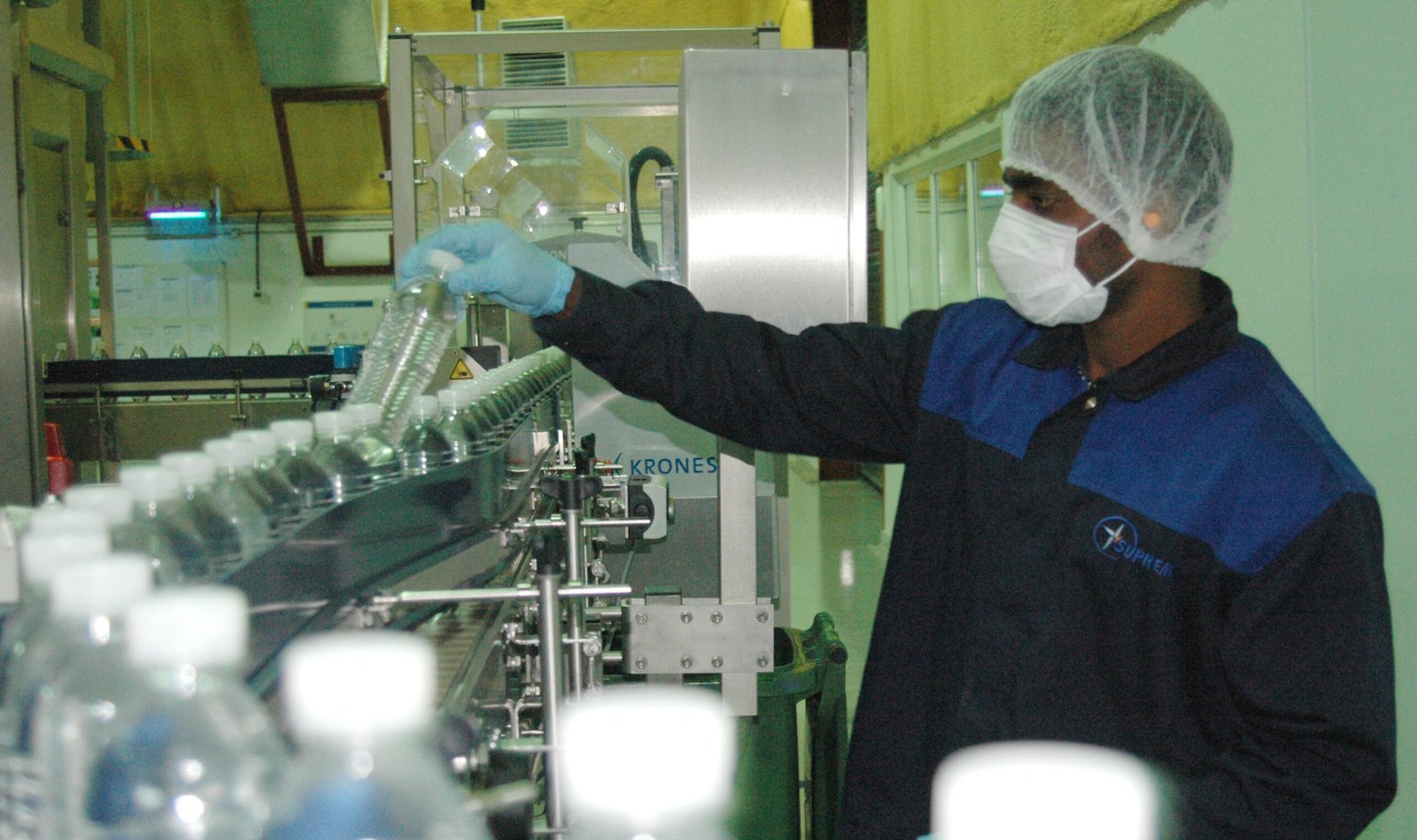
Why “ISO Certified” Is Not an Answer on Its Own
In the Indian packaged water market, certification is where the real quality gap hides. Most direct B2B competitors hold a basic licence and little else; a handful of national brands hold certification depth but will not private-label at all. Almost none combine a full four-certificate stack with private-label capability across every format.
That gap is commercial, not academic. Water is the category where a defect is most visible, and a bottled water problem does not stay a supplier problem — it becomes a recall, a delisting, or a headline with your brand name on it. A certificate is also the cheapest available evidence that a manufacturer controls its process, because it means an independent auditor has walked the plant, checked the records, and put their accreditation on the line. So the practical question is not “are you ISO certified” but “which standard, which body, which site, in force until when, and can I see the paperwork”.
The Four Certifications, Explained Properly
Each certification in a credible manufacturer’s stack verifies something different. Buyers who treat them as interchangeable end up under-protected in one area and over-focused in another.
| Certification | What it actually verifies | Who audits it | What it protects the buyer from |
|---|---|---|---|
| ISO 22000 (Food Safety Management System) | A documented food-safety system built on HACCP principles: hazard analysis, prerequisite programmes, critical control points, monitoring, traceability, recall procedure, continuous improvement | An independent accredited certification body, after a two-stage audit; three-year certificate cycle with annual surveillance audits | Undocumented hygiene and process control — the failure mode behind microbiological contamination, recalls, and delistings |
| ISO 9001 (Quality Management System) | Organisational quality management: process control, document control, supplier approval, calibration, performance measurement, corrective and preventive action, complaint handling | Independent accredited certification body, same three-year cycle with surveillance audits | Inconsistency — batch-to-batch variation, wrong labels, missed specs, unmanaged complaints |
| HACCP | Applied hazard analysis at each process step, with critical limits, monitoring, verification, and records — the seven Codex Alimentarius principles | Third-party certification bodies and accredited auditors; in food manufacturing the system is expected or required in most markets even where certification is voluntary | Unidentified physical, chemical, and biological hazards at specific process steps — exactly what a food-safety inspection asks about |
| US FDA registration | Regulatory compliance for the US market: facility registration with a designated US agent, bottled water CGMPs (21 CFR Part 129), the bottled water quality standard (21 CFR 165.110), plus FSMA preventive-control obligations | The FDA itself — it registers, inspects, and enforces; it does not issue certificates. Treat any “FDA certified” claim as a warning sign | Being blocked at the US border, FSVP failure by the importer, and label or quality-standard breaches |
Note the asymmetry: three of the four are certifications with audits and expiry dates, one is a government registration regime with no certificate at all. Suppliers routinely blur that line, and an importer’s due-diligence file should never contain an “FDA certificate” — the correct evidence is the facility registration number, US agent details, and compliance records.
Where higher-level schemes fit in
Two limits are worth knowing. ISO 22000 on its own is not a GFSI-benchmarked scheme, and neither is standalone HACCP; GFSI recognition (FSSC 22000, BRCGS, SQF) exists because multinational retailers wanted a scheme going beyond ISO 22000’s baseline, and FSSC 22000 is built on ISO 22000 plus those extra layers. Practical rule: for hotels, corporates, gyms, event companies, and most food-service and distribution buyers, the ISO 22000 + ISO 9001 + HACCP + FDA registration stack is the working baseline, and GFSI-benchmarked certification becomes essential when your end customer is a multinational grocery retailer with its own supplier standard.
“A certificate is not a marketing badge — it is evidence that someone with accreditation to lose has already checked the process you are about to build your brand on.”
The Indian Baseline — and What Changed in 2026
International certifications sit on top of an Indian compliance floor, and that floor moved recently enough that many buyer checklists are now out of date.
Every packaged drinking water or mineral water manufacturer in India is a Food Business Operator and must hold a valid FSSAI licence for the activity — a Central licence for larger manufacturers and exporters. Historically, packaged drinking water also required mandatory BIS certification under IS 14543 and carried the ISI mark on every bottle, with packaged natural mineral water covered by IS 13428.
FSSAI has since gazette-notified the omission of the provision making BIS certification mandatory for packaged drinking water and mineral water, replacing it with a compulsory Scheme of Testing that applies to every licensed water business from 1 January 2026. In practice that shifts the burden from a single product mark to ongoing evidence: regular microbiological and chemical testing of source and finished water through FSSAI-notified, NABL-accredited laboratories, maintained test records, and risk-based inspections.
For a brand owner the takeaway is simple: stop accepting “we are BIS certified” as a complete answer, and do not assume a missing ISI mark means an unlicensed plant. Ask for the FSSAI licence — number, category, and the address it covers — and recent test reports from an accredited laboratory.
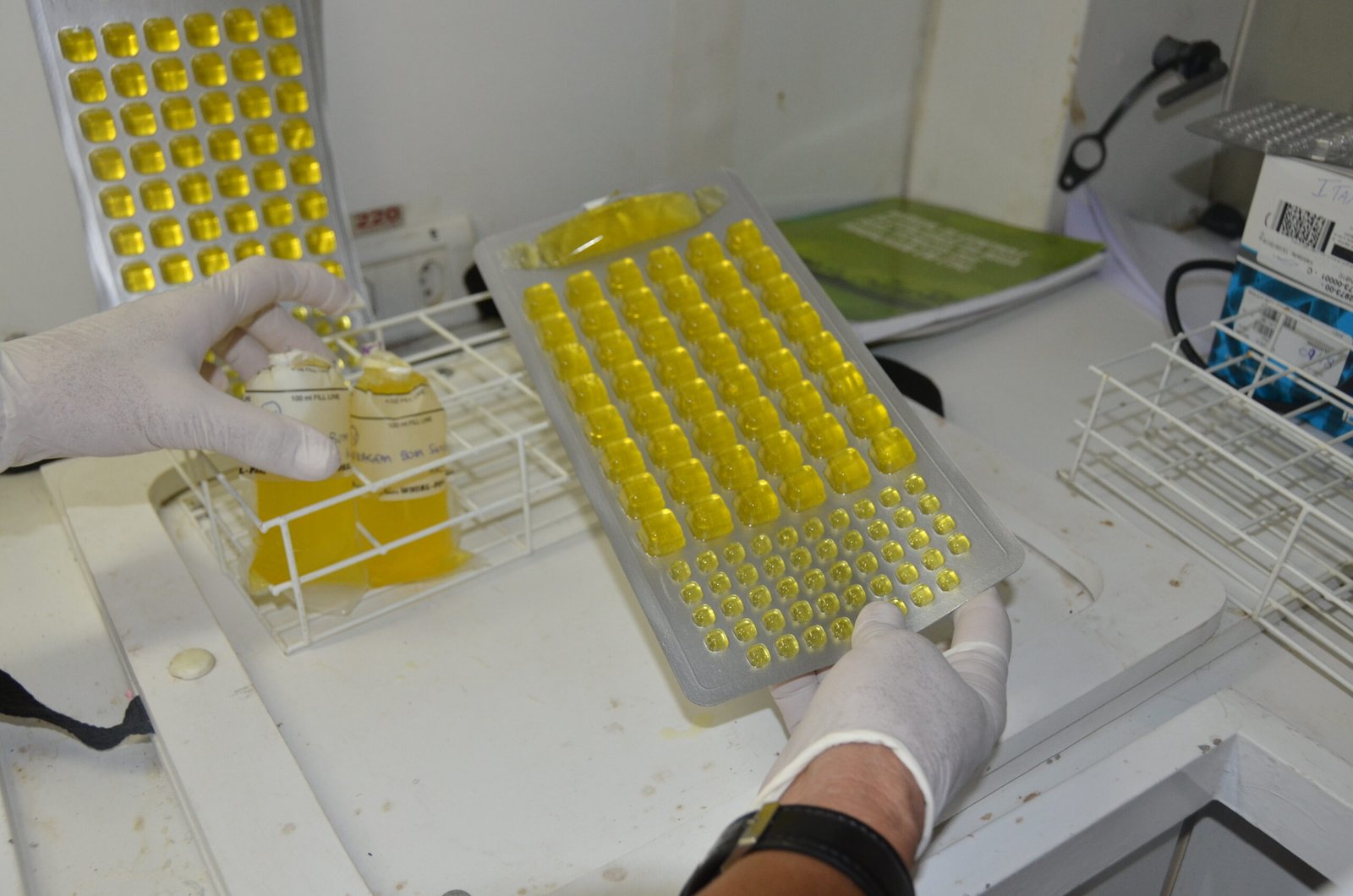
How to Verify Certifications in Ten Minutes
Verification is the step buyers skip, and the step that catches the most trouble. Every legitimate certification can be checked independently, usually without asking the supplier for anything further.
| What to ask for | What it proves | Red flag |
|---|---|---|
| Certificate copy with certificate number, and the certifying body’s name and logo | The standard, issue date, and expiry date | No number or expiry, or a generic “ISO” logo with no accredited body named |
| The certificate scope and the site address named on it | That certification covers the plant bottling your product, not a head office or another unit | Scope saying “trading” or “marketing” when you are buying manufactured product |
| Certifying body’s accreditation (IAF member, UKAS, or equivalent) | That the auditor itself is accredited to issue the certificate | An unaccredited “certification company” with no national accreditation behind it |
| Independent lookup of the certificate number on the certifying body’s website | That the certificate exists, is in the stated name, and is currently valid | A supplier deflecting to a PDF instead of a live lookup |
| Latest surveillance-audit confirmation | That the system is maintained, not just certified once | A certificate issued three years ago with no audit evidence since |
| Recent test reports from a NABL or ISO/IEC 17025-accredited laboratory, with parameters and results | That the water actually meets the claimed spec — pH, TDS, microbiology, chemistry | No laboratory name, no method, no sample date, or sample dates older than 12 months |
| FDA facility registration number and US agent (if supplying the US) | That the facility is legally registered for that market | A supplier presenting an “FDA certificate” |
Two habits make this painless: put the certificate and report requirements directly into your RFQ document so every supplier answers the same checklist, then verify the two or three shortlisted suppliers yourself by lookup rather than trusting the documents they send. The structured version of this process is in our 8-point vendor checklist.
What the Certification Stack Buys the Brand Owner
- You inherit an audit trail instead of an audit burden. When your own customers — a hotel group’s quality team, a corporate procurement audit, an airline caterer, a retail chain’s supplier questionnaire — ask for food-safety assurance, you answer with documentation rather than a promise.
- The claims on your label become defensible. If your bottle says “alkaline pH 8+” or carries a mineral profile, that claim must survive scrutiny. Accredited-lab test reports produced under a certified testing programme are what make it safe to print; without them, one complaint or regulatory sample turns a marketing line into a liability. The underlying spec is explained in our post on what pH 8+ alkaline water actually means.
- Export becomes an option rather than a rebuild. The same four certifications are the baseline documentation importers in the UAE, UK, Singapore, and Vietnam ask for, since each importer must satisfy its own regulator. See our export guide for those four markets, and for one worked example, the Emirates Quality Mark explainer.
- Recall and insurance exposure shrink. A documented recall procedure, batch-to-delivery traceability, and tested corrective action make a bad batch a contained operational event rather than an open-ended reputational one.
Certifications Are Plant-Level, Whatever the Format or the Label
Two structural points confuse buyers, and both matter. First, format: the food-safety system, quality system, and HACCP controls cover the plant and its processes regardless of whether your product runs in can, PET, glass, or PLA; packaging-specific duties (food-contact compliance, closure integrity, filling hygiene) sit alongside them. That is why one manufacturer certified across its processes and able to run 200ml to 20L gives you a single auditable relationship instead of four suppliers.
Second, ownership: ISO 22000, ISO 9001, HACCP, and FDA registration attach to the operating facility. In a true private label arrangement your brand owns the product and often the manufacturer’s name does not appear on the label, so your customers, regulator, and insurer will still look to the plant’s documentation for assurance. If your supplier is a trading or marketing company with no plant, the certification you need to see belongs to the actual manufacturer — and you should know who that is before you commit. The two models are compared in our private label vs. white label guide, and the procurement-side view for hospitality buyers is in our hotel procurement guide.
Frequently Asked Questions
Is ISO 22000 the same as HACCP? Do I need both?
No. HACCP is a hazard-control methodology — the seven Codex principles applied at each process step. ISO 22000 is a full food-safety management system standard that incorporates HACCP principles and adds management-system requirements such as policy, planning, verification, and improvement. A manufacturer holding both has the methodology and the management framework, which buyers generally treat as stronger than either alone.
Is a company “US FDA certified”?
No — and a supplier using that phrase is telling you how carefully it reads its own compliance. The FDA is a regulator, not a certification body. For bottled water it requires foreign facilities to register with a US agent, applies CGMP rules for processing and bottling (21 CFR Part 129) and a quality standard (21 CFR 165.110), and under FSMA places supplier-verification duties on the US importer through the Foreign Supplier Verification Program. The correct evidence is the registration number, US agent details, and compliance records — not a certificate.
Do I need to re-verify certifications after onboarding a manufacturer?
Yes, on a schedule. ISO certificates run on three-year cycles with annual surveillance audits and can be suspended or withdrawn mid-cycle, so checking the certifying body’s online record at least annually — and before a major campaign or new-market launch — is good practice. Request updated test reports at the same time, since those have their own validity horizon (12 months is a common benchmark).
What if my supplier won’t share audit or test documentation?
Treat that as a decision, not a delay. A manufacturer with genuine certification shares scopes, certificate numbers, and recent accredited-lab reports as a matter of routine — it is a sales asset. Refusal usually means the certificate covers another entity, has lapsed, or the testing records do not exist in the form you are asking for. In a category where a safety failure becomes your brand’s problem, that is the supplier you walk away from.
Does a certification stack cost me more per bottle?
Certified manufacturers are not automatically the most expensive, but they are rarely the cheapest quote in a tender: you are paying for the audits, laboratory testing, quality staffing, and process discipline behind the certificate. The comparison that matters is not certificate versus no certificate — it is the cost of a recall, delisting, or failed customer audit against a small per-unit premium, which is why most B2B buyers treat certification depth as a qualification criterion before comparing prices.
Which certifications matter most if I plan to export?
For the UAE, UK, Singapore, and Vietnam, the same four are the practical baseline: ISO 22000 and HACCP for the food-safety system, ISO 9001 for process consistency, and FDA registration as a recognised signal of regulated-market compliance. Each destination then layers its own requirements — Emirates Quality Mark documentation in the UAE, UK food-safety and labelling rules, Singapore’s SFA import documentation including source information, and Vietnam’s self-declaration and accredited-lab-report regime.
Can a brand owner hold the certification instead of the manufacturer?
Not for the plant. ISO 22000, ISO 9001, HACCP certification, and FDA facility registration attach to the operating facility and its processes. A brand owner can hold separate certifications of its own business, but they do not substitute for the plant-level evidence your customers will ask for — which is the practical reason to deal with a manufacturer rather than an intermediary when you plan to scale.
The Bottom Line for Brand Owners
Certification is not paperwork that proves a supplier is pleasant to work with; it is the difference between a brand owner who can demonstrate control over a food-safety product and one who is trusting a price list. Ask which standard, which accredited body, which site, in force until when. Verify the numbers yourself. Request current accredited-laboratory reports. And treat an “FDA certified” claim as a small but telling accuracy failure.
Do that, and supplier comparison becomes genuinely objective — and the manufacturers that come out of it well are the ones you can scale with.
Muscular Monk’s Himalayan mineral water is bottled at source with a natural pH of 8+ and TDS of 220–280 ppm, under ISO 22000, ISO 9001, US FDA registration, and HACCP certification, across can, PET, glass, and PLA formats from 200ml to 20L, for 500+ brands across 50+ Indian cities and export markets. Ask us for our certification pack — certificate scopes, surveillance-audit confirmation, and current lab reports — request free samples for your format and spec, or talk to our team about a private label programme sized to your volumes.
Leave a Reply