Start Your Own Water Brand
Pan-India private label mineral water. Low MOQ, fast turnaround, 4 packaging formats.
What Is pH 8+ Alkaline Water — and Why It Matters for Your Private Label Brand
Alkaline water has moved from a wellness-culture curiosity to a mainstream retail category, and if you’re building your own water brand you’ve almost certainly been asked about it — by hotel guests, gym members, corporate buyers, or retail category managers. But there’s a lot of fuzzy marketing language around the term, and if you’re going to put “alkaline” on your label, you need to understand exactly what you’re claiming, what the science supports, and what Indian food law allows you to say. This guide gives you the straight version.
Direct answer: pH 8+ alkaline water is drinking water with a pH above 7 — the threshold where water stops being neutral and becomes alkaline (basic) on the 0–14 pH scale. The alkalinity can occur naturally, when water passes through mineral-rich rock and picks up alkaline minerals such as calcium, magnesium, and bicarbonates, or it can be created artificially by an ionization process at the bottling plant. Naturally alkaline mineral water carries its mineral profile — measured as TDS, total dissolved solids — directly in the water itself. For a private label brand, pH 8+ alkaline water matters less as a medical product and more as a premium, evidence-backed positioning angle: it is a real, measurable, lab-verifiable product specification that differentiates your brand from ordinary packaged drinking water — provided the health claims you make around it are honest.
For the full picture of how private label water manufacturing works in India — sourcing, certifications, formats, and pricing — see our complete guide to private label mineral water manufacturing in India.
The pH Scale, Explained Without Jargon
pH measures how acidic or alkaline a liquid is, on a scale from 0 to 14. A pH of 7 is neutral — pure water sits there, at least in theory. Below 7 is acidic; above 7 is alkaline (also called basic). Most ordinary tap water tests somewhere between 6.5 and 8.5, and most standard bottled waters land close to neutral. Water marketed as alkaline water typically tests between pH 8 and 9.
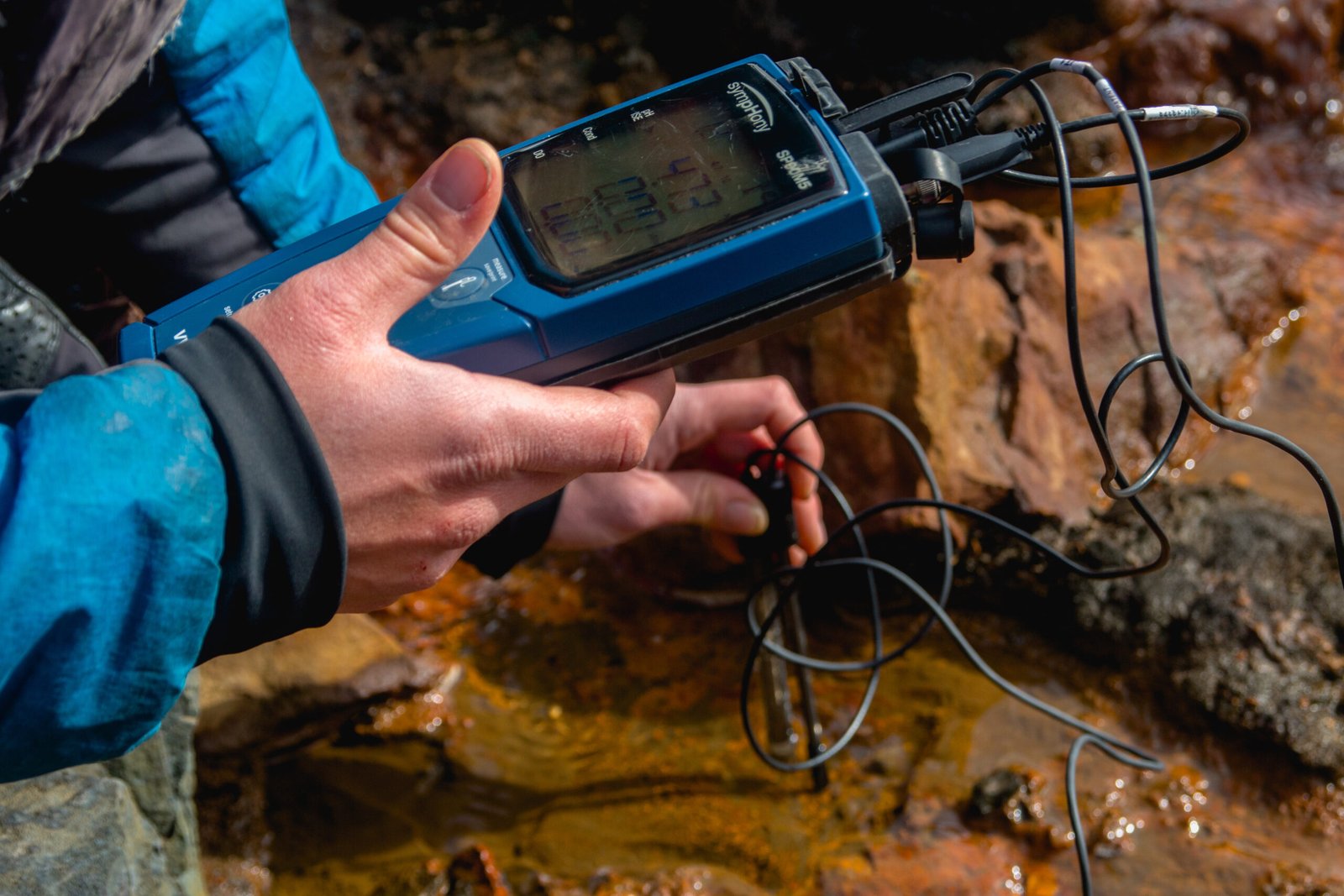
Two things matter for a brand owner here. First, pH is a measurable, certifiable specification — it appears on lab test reports, which means “pH 8+” is a claim you can back with documentation, not just marketing language. That’s rarer in beverage marketing than it sounds. Second, pH stability matters: a genuinely alkaline product must hold its pH from bottling through storage to the moment the guest opens the bottle, which is where natural mineral content does work that artificially raised pH often doesn’t.
Natural vs. Artificially Ionized Alkaline Water: Why the Source Matters
Not all alkaline water is created the same way, and the difference is commercially significant — not just technically.
- Naturally alkaline mineral water gets its pH from the geology it flows through. Water percolating through limestone, dolomite, or other mineral-rich formations dissolves calcium, magnesium, potassium, and bicarbonate alkalinity along the way. The result is water that is alkaline because of what’s dissolved in it — a real mineral profile you can quantify as TDS (total dissolved solids, measured in ppm). Himalayan-source waters are a classic case: the long mineral contact time in mountain aquifers produces naturally elevated pH with a measurable mineral signature.
- Artificially ionized (electrolyzed) water starts as ordinary purified water and is run through an ionizer that separates it into alkaline and acidic streams. The pH is raised, but the mineral content may not change meaningfully — and the elevated pH can be unstable, drifting back toward neutral over time because there’s little dissolved mineral content to buffer it.
- Mineral-reconstituted water — the third approach used by some brands — starts with purified water and adds alkaline minerals back in. This is legitimate and label-declarable, but it is not the same product story as water that came out of the source already alkaline.
For a private label brand, this distinction is your differentiation story. “Our water is naturally alkaline at pH 8+, bottled at source from Himalayan aquifers, with a natural TDS of 220–280 ppm” is a spec sheet and a provenance narrative in one sentence. A competitor reselling ionized tap-derived water cannot copy it — they’d have to change their actual production process. That is what a defensible product position looks like.
“pH is the rare wellness claim you can prove on a lab report. The winning move for a private label brand is not exaggerating what alkaline water does — it’s making sure every bottle you ship actually tests where your label says it does.”
What the Science Actually Says — An Honest Read for Brand Owners
If you’re going to build a brand on pH 8+ alkaline water, you need to know exactly what the research supports and what it doesn’t — because your buyers (hotel procurement teams, gym owners, retail category managers) increasingly do their homework, and because Indian food law takes label claims seriously. Here is the honest picture, drawn from the mainstream medical sources (Mayo Clinic, Harvard Health, Healthline) and the peer-reviewed literature:
| Common claim about alkaline water | What the evidence says |
|---|---|
| “It neutralizes acid in your body and balances your pH” | Not supported. The human body tightly regulates its own blood pH through the lungs and kidneys regardless of what water you drink. Mayo Clinic notes this claim isn’t backed by research. |
| “It prevents cancer and chronic disease” | Not supported. There is no solid human evidence that alkaline water prevents cancer or chronic disease. Making this claim on a retail label would also be a regulatory problem, not just a scientific one. |
| “It helps with acid reflux” | Partially supported, with caveats. A well-known peer-reviewed in-vitro study (published on PubMed, 2012) found that water at pH 8.8 permanently denatures pepsin — the enzyme involved in reflux damage — and has good acid-buffering capacity, suggesting possible therapeutic benefit for reflux sufferers. It’s a lab study, not a large clinical trial, so treat it as promising, not proven. |
| “It hydrates better than regular water” | Mixed/limited. Alkaline water is safe and hydrates like water; claims of superior hydration exist in small studies but aren’t established. |
| “It contributes dietary minerals (calcium, magnesium)” | Supported in the trivial sense — naturally mineral-rich water does contain these minerals, and mineral-rich water is a recognized dietary contributor. The amounts depend entirely on the water’s TDS and mineral profile. |
| “It’s safer or healthier for everyone” | Overstated. For most people alkaline water is simply safe to drink. Extremely high-pH water (above ~9) can taste bitter, and Harvard Health notes it can be a concern for people on certain stomach-acid medications. The body’s own regulation does the heavy lifting. |
Why lead with the unflattering rows? Two reasons. First, trust: a brand that says “our water is naturally alkaline at pH 8+, it may help with acid reflux per early research, and here’s our lab report” reads as credible; a brand that promises alkaline water cures cancer reads as a scam — to the exact procurement and F&B audiences you’re selling to. Second, compliance: India’s food labelling framework (FSSAI’s advertising and claims regulations) restricts health claims on food and beverage labels that aren’t substantiated. Sticking to verifiable product facts — pH value, TDS, mineral content, source, certifications — keeps your labels, website, and marketing inside the lines while still giving your brand a strong story.
Why pH 8+ Is a Powerful Positioning Angle for a Private Label Brand
Set aside the medical debate for a moment: from a pure brand-strategy standpoint, pH 8+ alkaline is one of the strongest differentiation levers available in the Indian bottled water market. Here’s why.
It’s a spec, not a vibe. Most premium-positioning attempts in water come down to packaging and price. “Alkaline, pH 8+” is a quantifiable product attribute that a buyer can verify — which means your sales conversations, your label copy, and your hotel/gym/retail pitch all stand on something solid. It survives scrutiny in a way “pure and refreshing” never will.
The category has real consumer momentum. Alkaline water is an established retail category internationally and is growing in India’s metro markets — gyms, wellness studios, premium hotels, and health-conscious retail shelves are where it shows up first. A hotel guest who chooses the alkaline option at breakfast, or a gym member who grabs the pH 8+ bottle from the front desk, is making a choice your brand can own on the shelf — if your label carries the spec.
It pairs naturally with premium formats. Alkaline positioning slots directly into the formats that command premium pricing — aluminum cans for gyms and events, glass bottles for fine dining and hotel rooms, PLA bottles for sustainability-led brands. A pH 8+ story on a premium format justifies a premium price; the same story on a flimsy pouch does not. [Internal link: link to future format comparison post — aluminum can vs. PET vs. glass vs. PLA]
It feeds vertical selling. Gyms and fitness studios are the most natural first vertical for an alkaline private label brand — the audience overlap is direct. Hotels use it in wellness packages and premium in-room minibars. Corporate wellness programs use it in pantry and event stock. Each of these is a repeat-volume B2B account, which is exactly the business a private label water manufacturer wants. [Internal link: link to future gym/fitness-studio private label water post]
It’s a wedge against bigger competitors. India’s largest packaged water brands compete on distribution, not product differentiation. A smaller brand cannot out-spend Bisleri or a national retail chain on logistics — but it can out-position them on a spec they don’t lead with. For a hotel chain or retail brand building its own label, “naturally alkaline Himalayan water” is a story the giants’ standard products can’t match.
The Spec Sheet to Demand From Any Alkaline Water Supplier
If you’re evaluating manufacturers for a pH 8+ private label product — ours or anyone’s — these are the numbers and documents that separate real alkaline water from marketing:
- Tested pH at bottling and over shelf life. Ask for recent lab reports showing pH, not just a brochure number. A stable pH 8+ through the product’s shelf life proves the alkalinity is buffered by real mineral content, not fleeting ionization.
- TDS value and mineral breakdown. TDS (total dissolved solids) in ppm tells you how much actual mineral content the water carries. Muscular Monk’s water sits at a natural TDS of 220–280 ppm — a range that delivers real mineral character without heaviness. Ask any supplier for the calcium, magnesium, and bicarbonate values behind their headline TDS. [Internal link: link to future TDS 220–280 explainer post]
- Source transparency. “Bottled at source” should mean the plant is at the aquifer/spring, not that tankered water was processed in a city. Source transparency is also what makes the provenance story defensible in your marketing.
- Certification stack. ISO 22000 (food safety management), ISO 9001 (quality management), US FDA registration, and HACCP are the difference between a spec you can show a procurement department and a spec you can’t. Certification documents also de-risk any export ambitions your brand develops later — see our export guide for UAE, UK, Singapore & Vietnam.
- Label-claim review. A serious manufacturer will help you keep your label copy compliant — pH and TDS facts on the label, no disease-cure claims anywhere. If a supplier encourages you to make medical claims, walk away; their risk becomes your brand’s recall.
Certifications deserve their own attention when you’re vetting any water partner — we cover the full breakdown in what each certification actually verifies.
Matching the Format to the Vertical
| Vertical | Why pH 8+ alkaline fits | Recommended formats |
|---|---|---|
| Gyms & fitness studios | Wellness-aligned audience; alkaline water is already an expected premium option on the front desk | Aluminum cans, 500ml–1L PET |
| Hotels & resorts | Wellness packages, premium in-room and minibar placement, banquet differentiation | Glass bottles for fine dining/in-room, PET for banquets |
| Corporates & offices | Employee wellness programs, branded pantry stock, event gifting | PET bottles, 200ml cans for events |
| Retail chains | Fast-growing alkaline shelf category with premium margins vs. standard water | PET multi-size range, cans |
| Export-facing brands | Alkaline + Himalayan provenance is a differentiated import story in the UAE, UK, Singapore & Vietnam | Glass and cans for premium export SKUs |
For the hospitality angle in detail — volume tiers, in-room vs. banquet use cases, and procurement specifics — see our bulk packaged drinking water procurement guide for hotels. And if you’re weighing private label against white label for your first alkaline SKU, the decision framework is in our private label vs. white label comparison.
Frequently Asked Questions
What does pH 8+ mean in water?
It means the water tests above 7 on the 0–14 pH scale, making it alkaline rather than neutral or acidic. pH 8+ water typically owes its alkalinity to dissolved alkaline minerals — calcium, magnesium, potassium, and bicarbonates — picked up from the rock the water passed through, or added artificially via ionization.
Is alkaline water actually good for you?
Alkaline water is safe to drink and hydrates like any water. Some health claims made for it — neutralizing body acid, preventing cancer, anti-aging — are not supported by research. Early lab research does suggest possible benefits for acid reflux sufferers, and naturally mineral-rich alkaline water does contribute dietary minerals. The honest framing: it’s a real, verifiable product spec with promising but limited proven health benefits — which is exactly why brands should market the facts, not miracles.
What is the difference between natural and ionized alkaline water?
Natural alkaline water is alkaline because of the minerals dissolved in it at the source — it carries a measurable TDS and mineral profile and holds its pH over time. Ionized alkaline water is ordinary purified water run through an electrolysis device; the pH is raised but the mineral content may be minimal, and the elevated pH can drift back toward neutral during storage.
Can I put “alkaline water” on my private label brand in India?
Yes, as long as the claim is accurate and your labelling complies with FSSAI requirements — pH is a factual, lab-verifiable specification. What you cannot do is make unsubstantiated medical or disease-cure claims on the label or in marketing; India’s food advertising and claims regulations restrict those. Work with a manufacturer who supplies current lab reports so your label numbers are always defensible.
What pH and TDS should I look for in a private label alkaline water?
A pH of 8 to 8.8 is the practical sweet spot — meaningfully alkaline, stable, and still pleasant-tasting (water much above pH 9 tends to taste bitter). For TDS, a natural range around 220–280 ppm delivers real mineral character without heaviness. Ask any supplier for shelf-life pH stability data and the individual mineral breakdown behind the TDS number.
Does alkaline water command a price premium in India?
Yes. Alkaline water consistently retails at a premium to standard packaged drinking water in India’s metros, in gyms, wellness retail, hotels, and premium grocery. For a private label brand owner, that premium margin is the core commercial argument — provided the product genuinely delivers the spec on the label.
Is Muscular Monk’s alkaline water natural or ionized?
Natural. Muscular Monk’s water is Himalayan-sourced, bottled at source, and naturally alkaline at pH 8+ with a natural TDS of 220–280 ppm — no artificial ionization. It’s available across aluminum can, PET, glass, and PLA formats from 200ml to 20L, backed by ISO 22000, ISO 9001, US FDA, and HACCP certifications, with 500+ brands served across 50+ cities in India.
The Bottom Line for Your Brand
pH 8+ alkaline water is not a medical miracle, and a brand that treats it like one will eventually meet a procurement manager with a search engine. But it is something more durable: a real, measurable, natural product attribute with genuine consumer demand behind it. Paired with a Himalayan source story, a full certification stack, and premium packaging formats, natural alkaline water gives a private label brand a position that larger competitors can’t easily copy and regulators can’t fault.
The next step is simple: compare the water, not the brochure. Request free samples of our pH 8+ alkaline mineral water with the accompanying lab reports, or talk to our team about format, MOQ, and delivery options for your city and vertical — or get a custom quote for your brand’s first production run.
Leave a Reply